Contact Us:Info@diyottoman.com

Cart

Your cart is currently empty.

Continue shopping
A new design philosophy—not by improving fabrics, but by rethinking structure.

A Structural Revolution in Outdoor Cushions

Outdoor cushions have improved dramatically over the past decade.
Better fabrics, quick-dry foams, and protective covers are now widely used.
Yet one fundamental assumption has remained unchanged:
that outdoor cushions must be built around fabric covers.
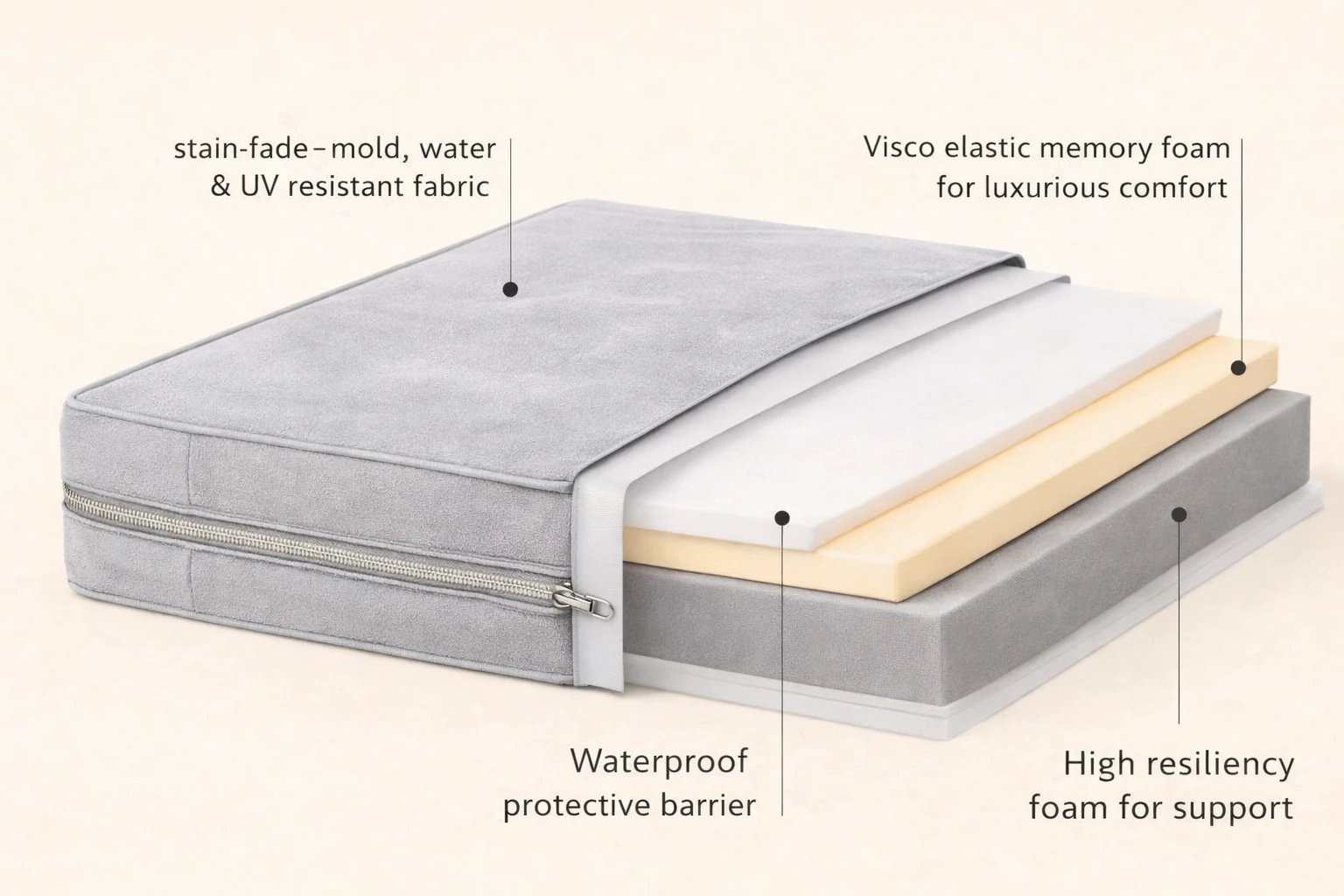
Cross-section View
The Traditional Cushion Structure

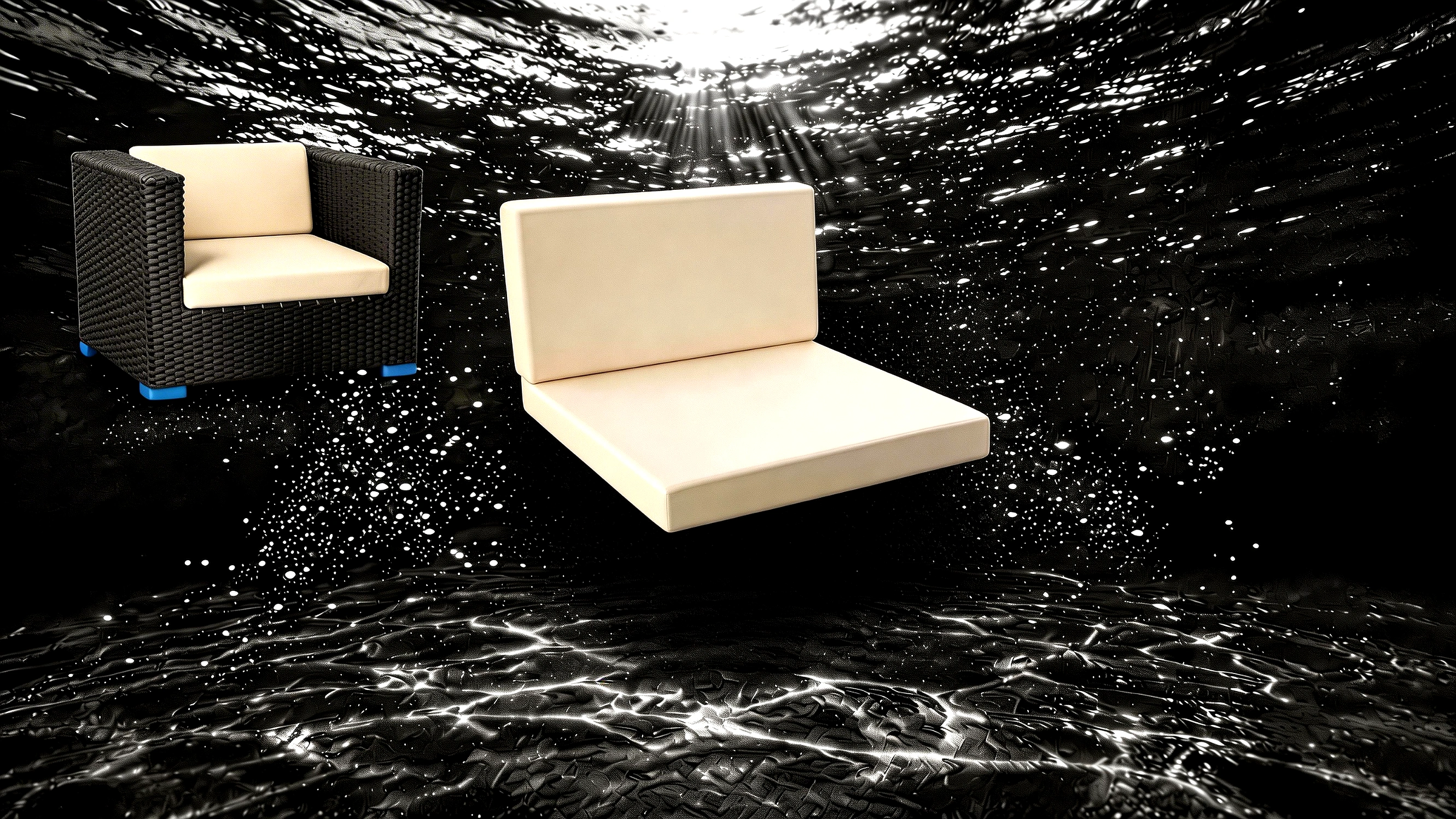
Most outdoor cushions follow the same basic construction:

  • A fabric or leather cover

  • Internal quick-dry foam

  • Seams, stitching, or zippers and openings

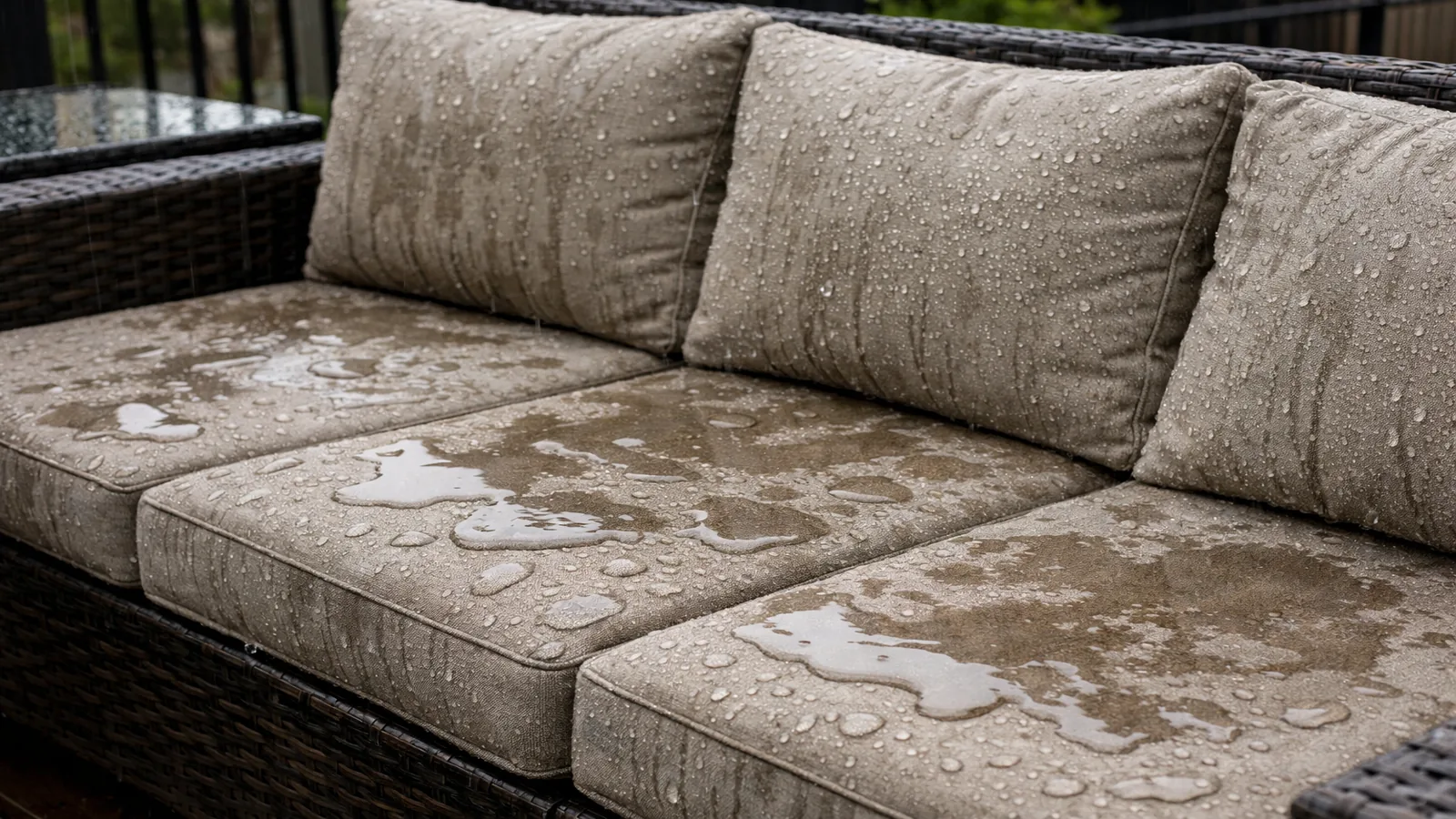
This structure assumes that water may enter the cushion and must be managed afterward—through drying, washing, or storage when you don't use it.


For a full material-level comparison, see Fabric vs Marine Vinyl vs Seamless Polyurethane Cushions

OUR SEAMLESS CUSHIONS
Cross-section View
The Seamless Cushion Structure

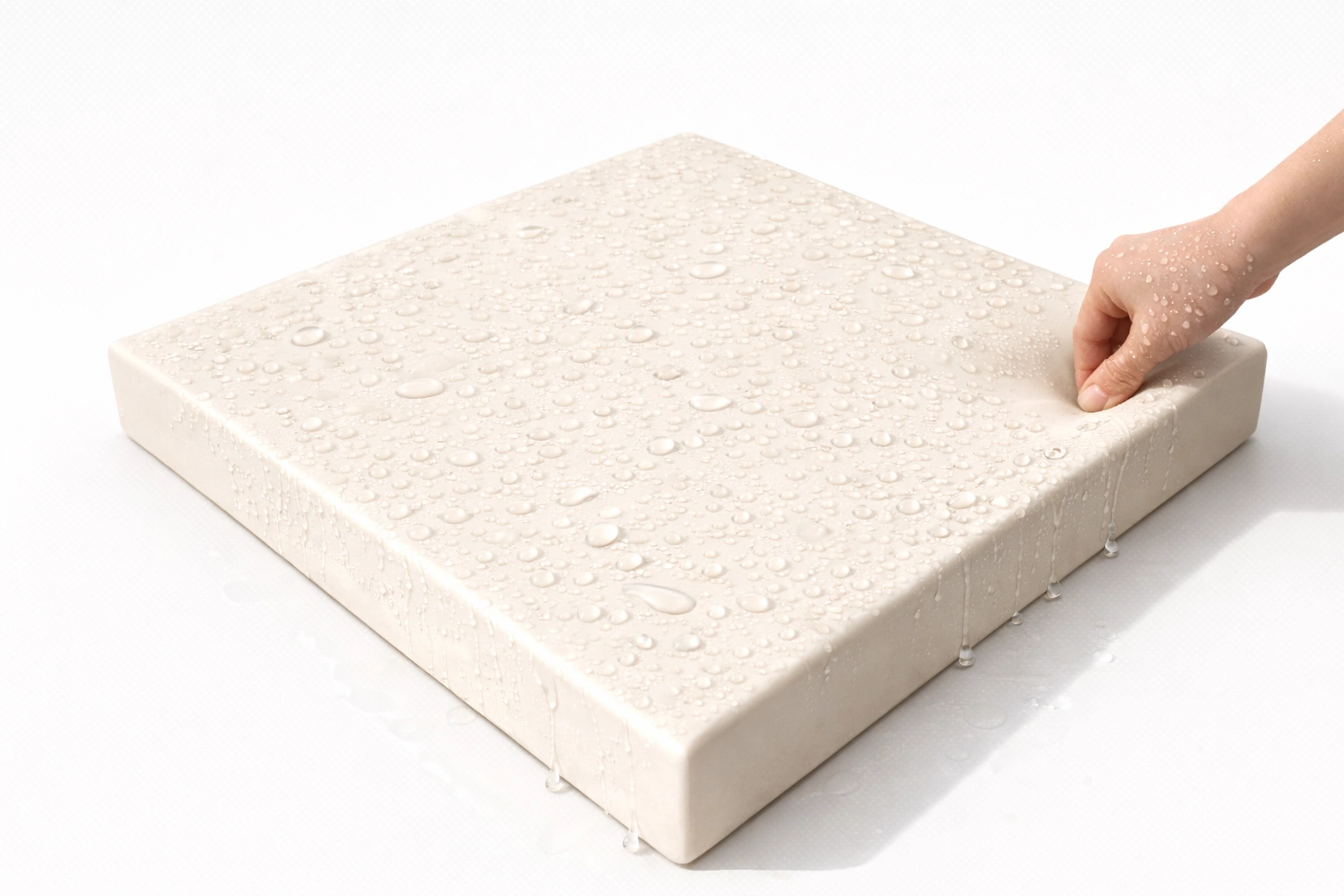
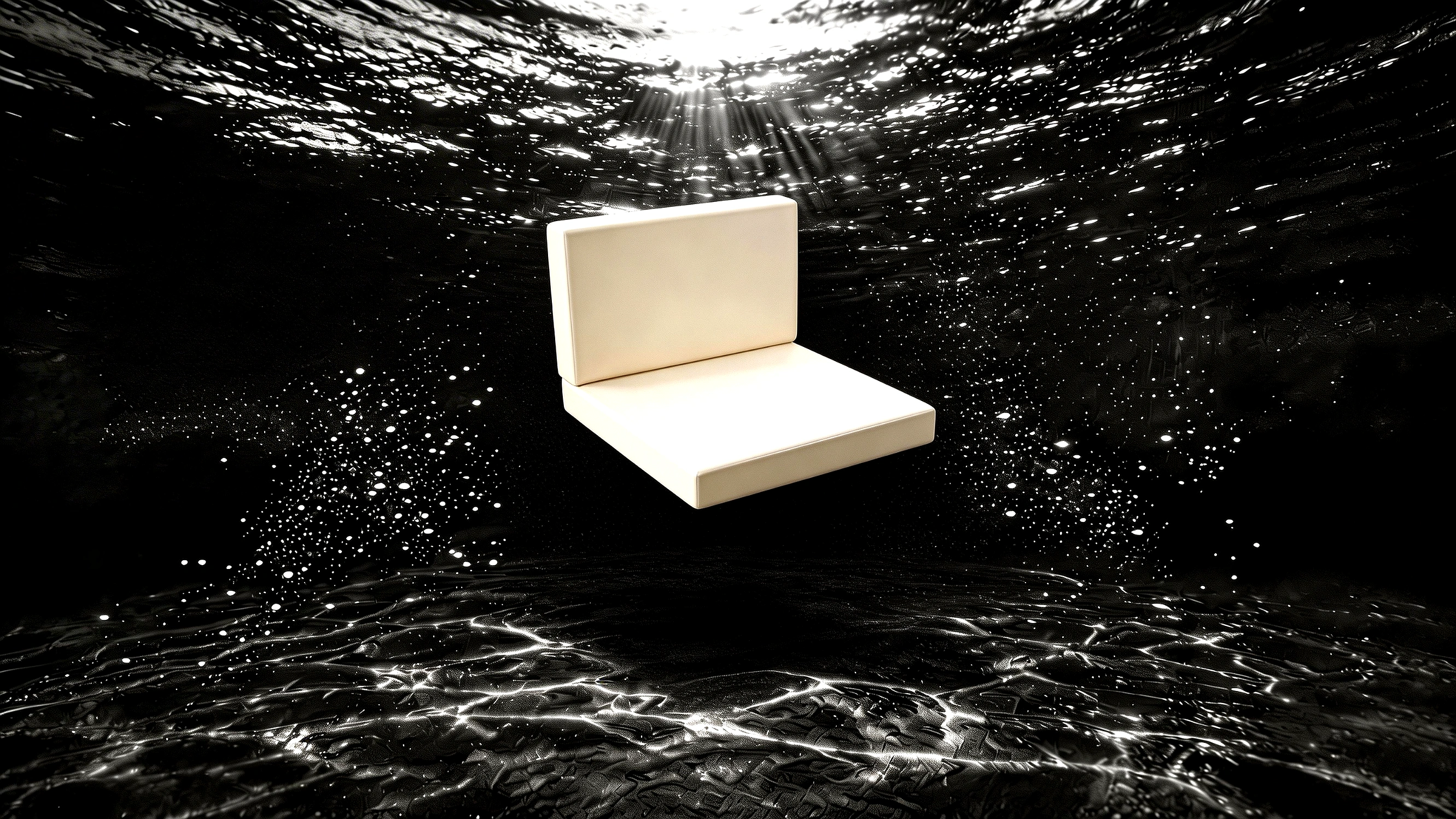
At the core is a solid rectangular cushion made from high-density resilient foam—eliminating the need for traditional quick-dry foams.
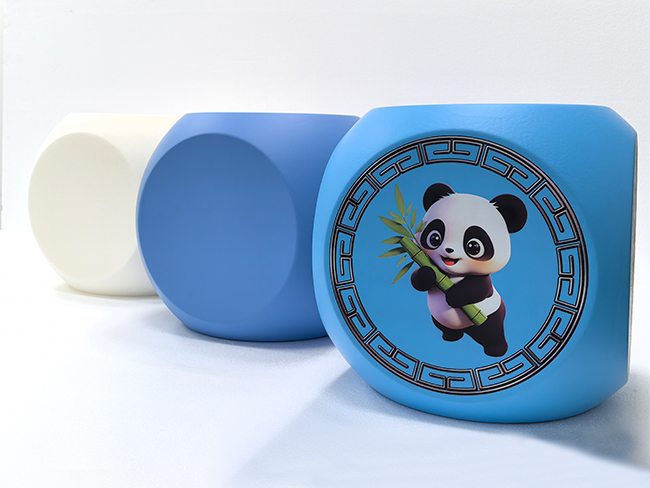
A layer of polyurethane is then applied directly onto the foam surface, where it cures into a smooth, leather-like skin.
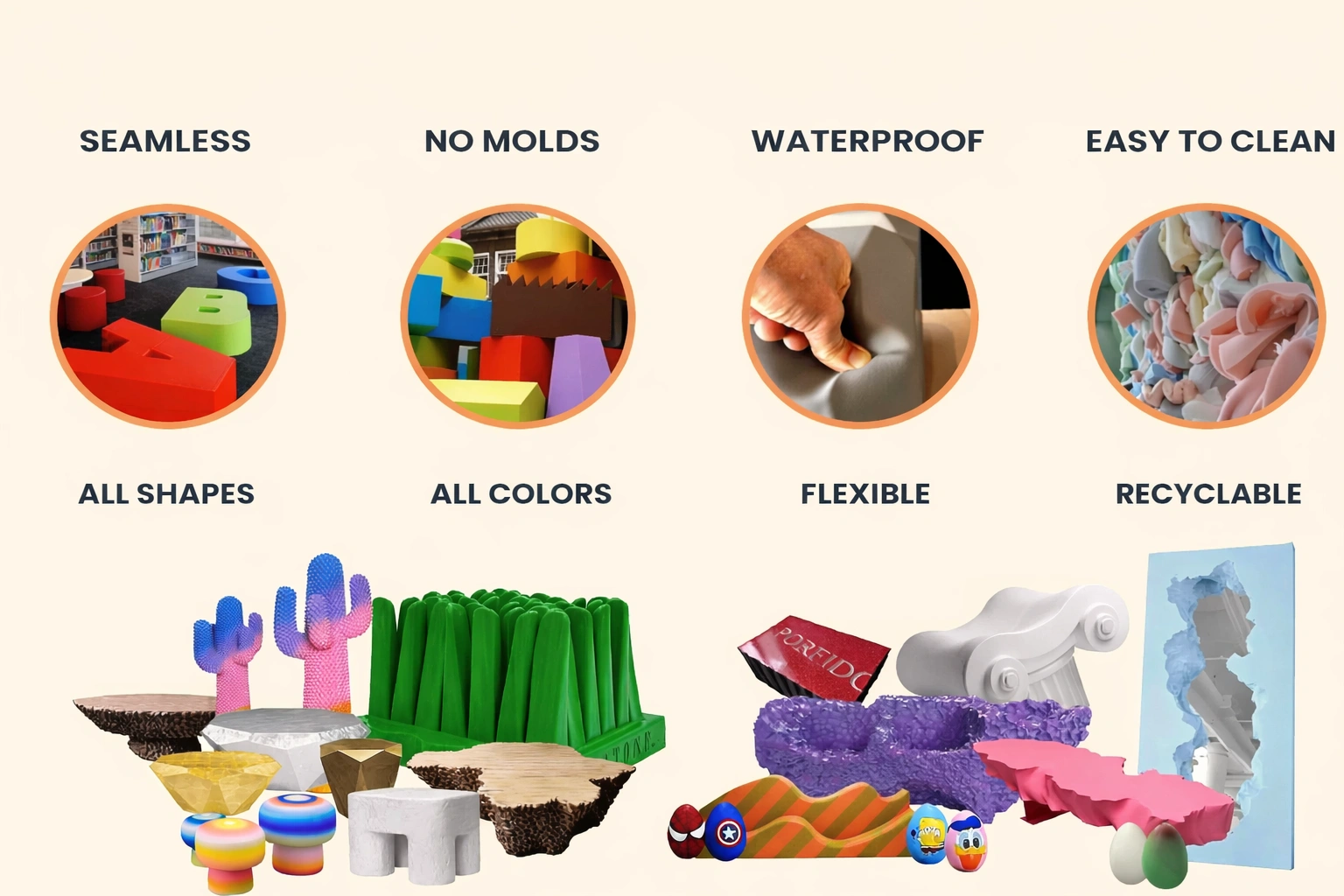
The result is a fully sealed, 360-degree seamless cushion structure with a clean, continuous surface.

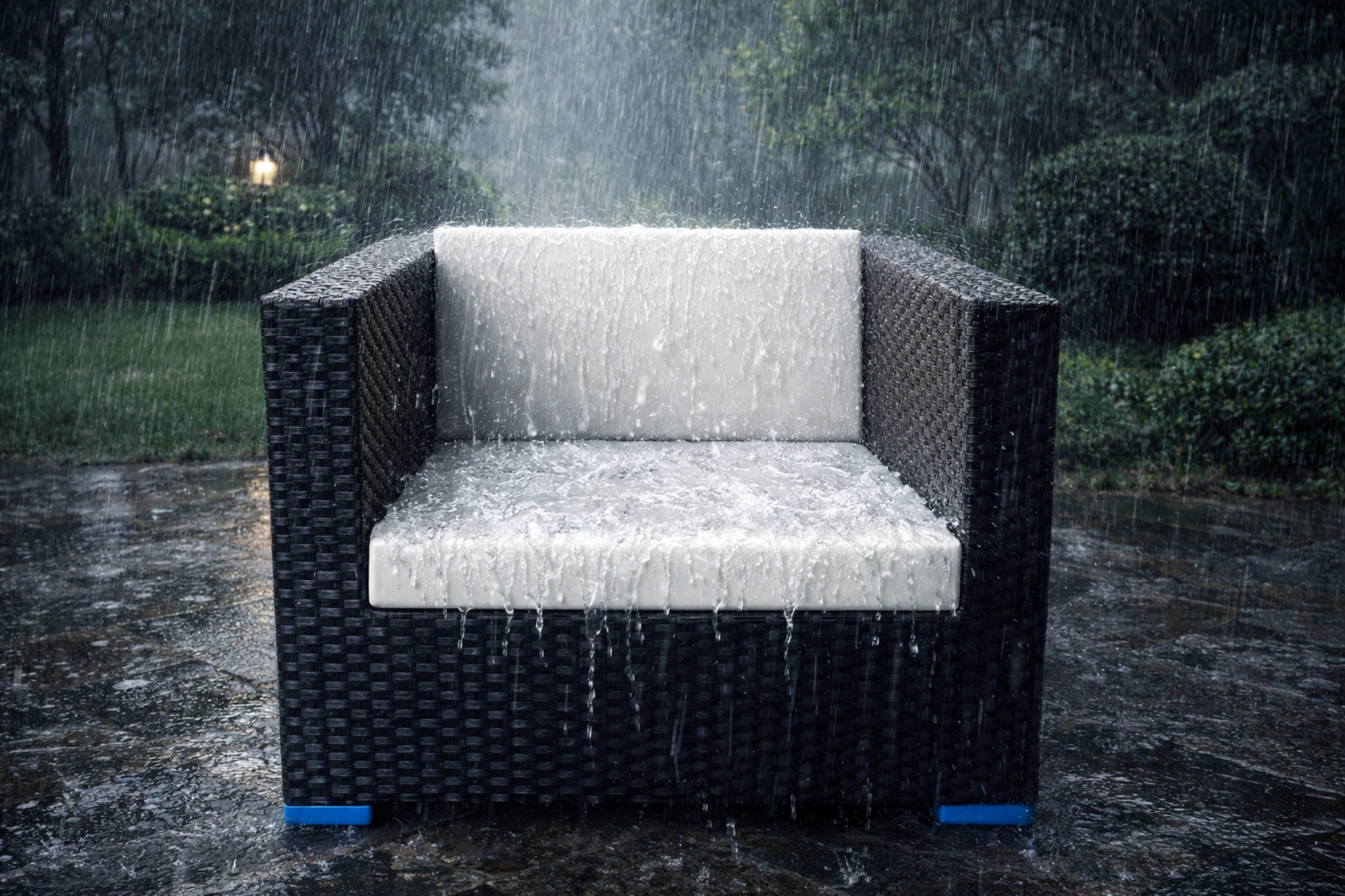
This construction removes maintenance entirely.

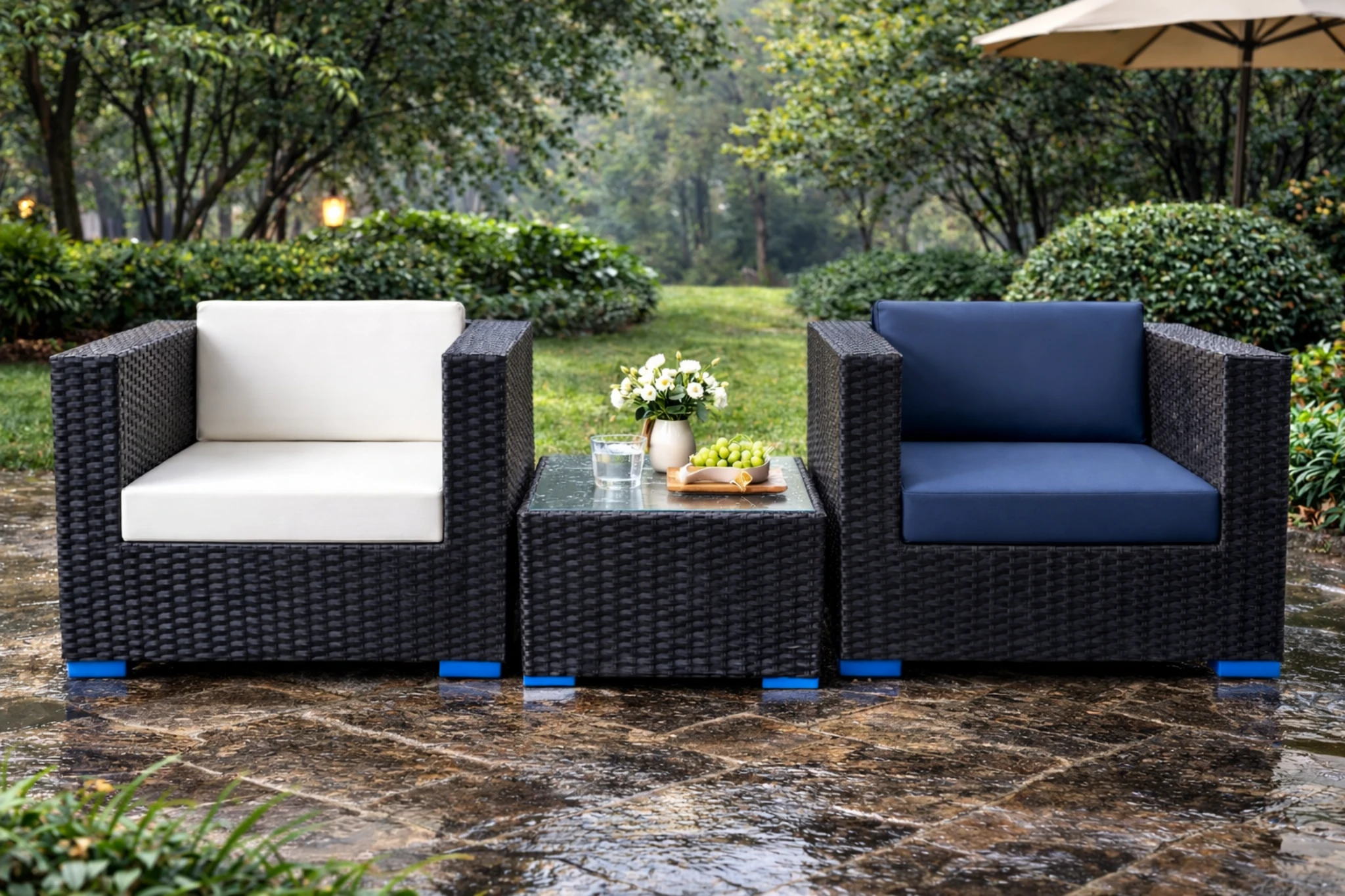
There is no fabric cover to remove, no scrubbing, no drying, and no need to bring cushions indoors when it rains.


OUR SEAMLESS CUSHIONS
Why Structure Matters More Than Materials

No matter how advanced a fabric becomes, seams and textile gaps remain potential pathways for moisture.

Once water reaches the foam core:

  • Drying becomes slow

  • Internal moisture may remain

  • Mold risk increases over time

These are structural limitations, not material flaws.

OUR SEAMLESS CUSHIONS
From Managing Water to Eliminating It

A structural approach to waterproofing starts with a different question:

What if water never reached the foam at all?

Instead of protecting fabric, this approach removes fabric layers entirely and forms a seamless waterproof surface directly around the foam core.

By eliminating seams and interfaces, moisture pathways are removed at the structural level.

OUR SEAMLESS CUSHIONS
A Shift in Outdoor Living Expectations

This shift mirrors changes seen in other industries—from rainwear to marine upholstery—where design moved from “water-resistant” to truly waterproof systems.

For outdoor cushions, the change is not incremental.
It is structural.

OUR SEAMLESS CUSHIONS
Pillar Takeaway

Understanding outdoor cushion performance requires looking beyond surface materials and focusing on structure.

This structural shift explains why traditional problems—wet cushions, mold, constant maintenance—persist, and how they can finally be eliminated.


This structural failure is explained in detail in :

Why Most Outdoor Cushions Fail | Structural Waterproofing Explained

OUR SEAMLESS CUSHIONS