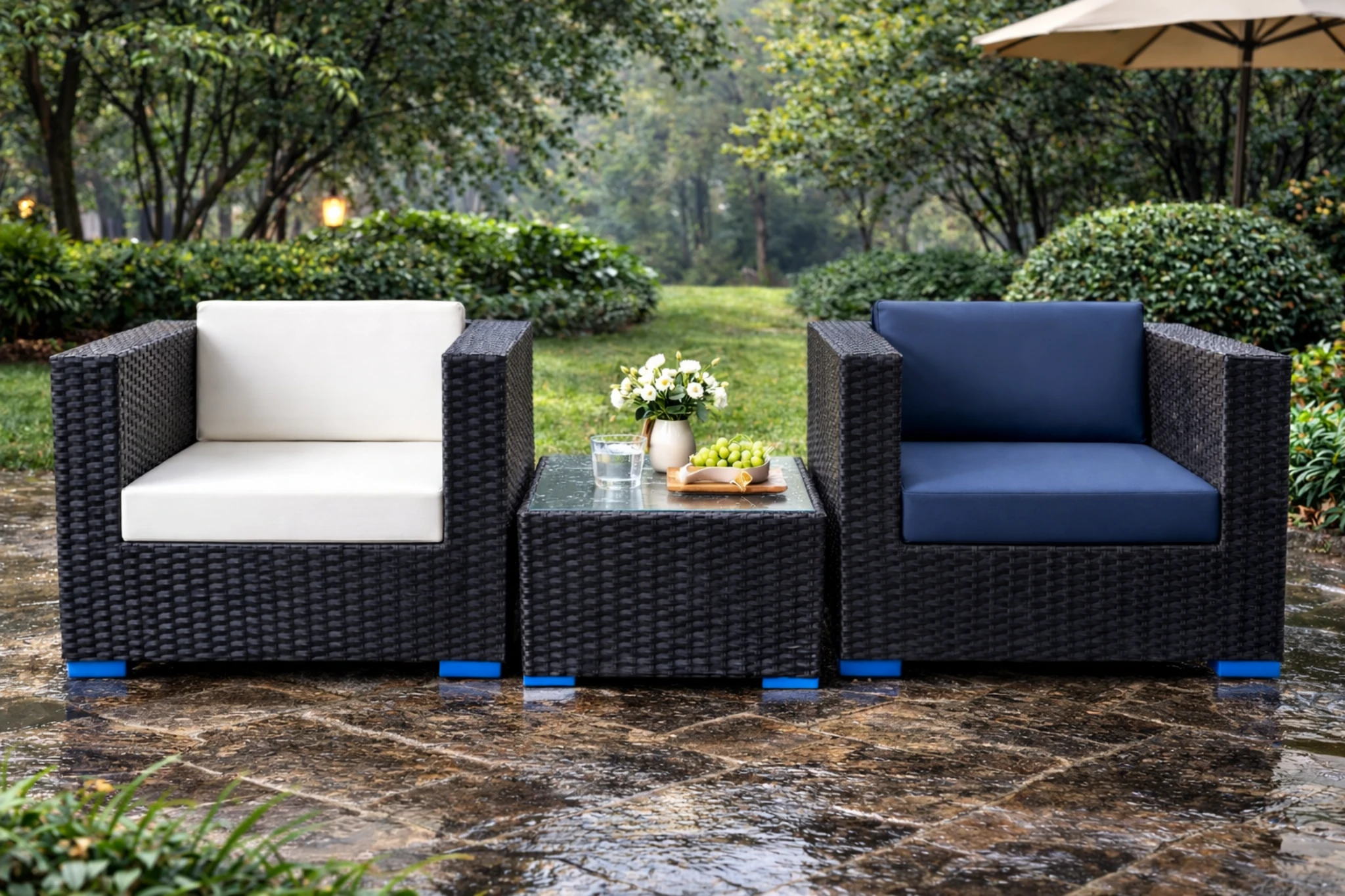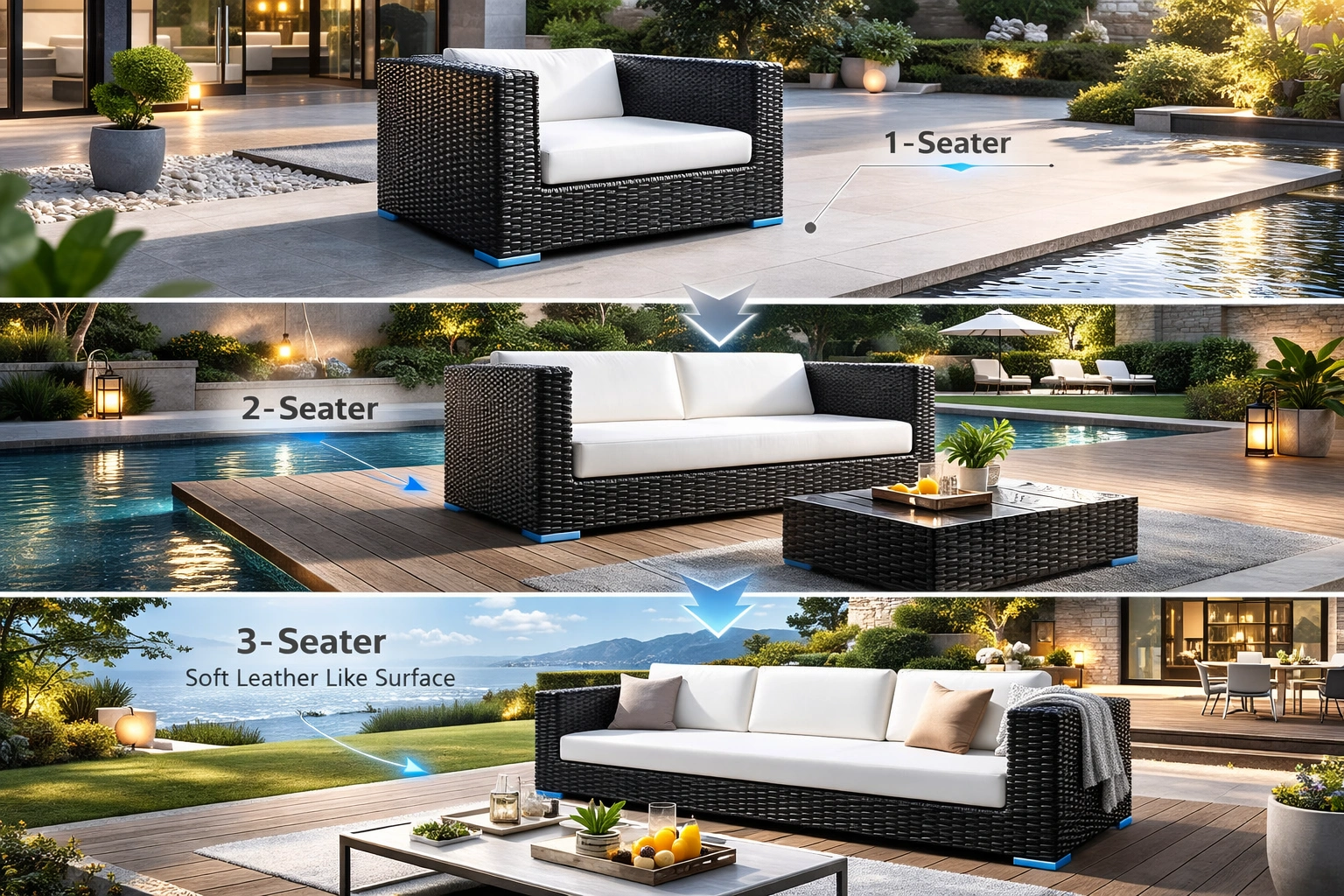
Outdoor furniture has always had one unsolved problem:
cushions are difficult to maintain because they are not truly waterproof by structure.
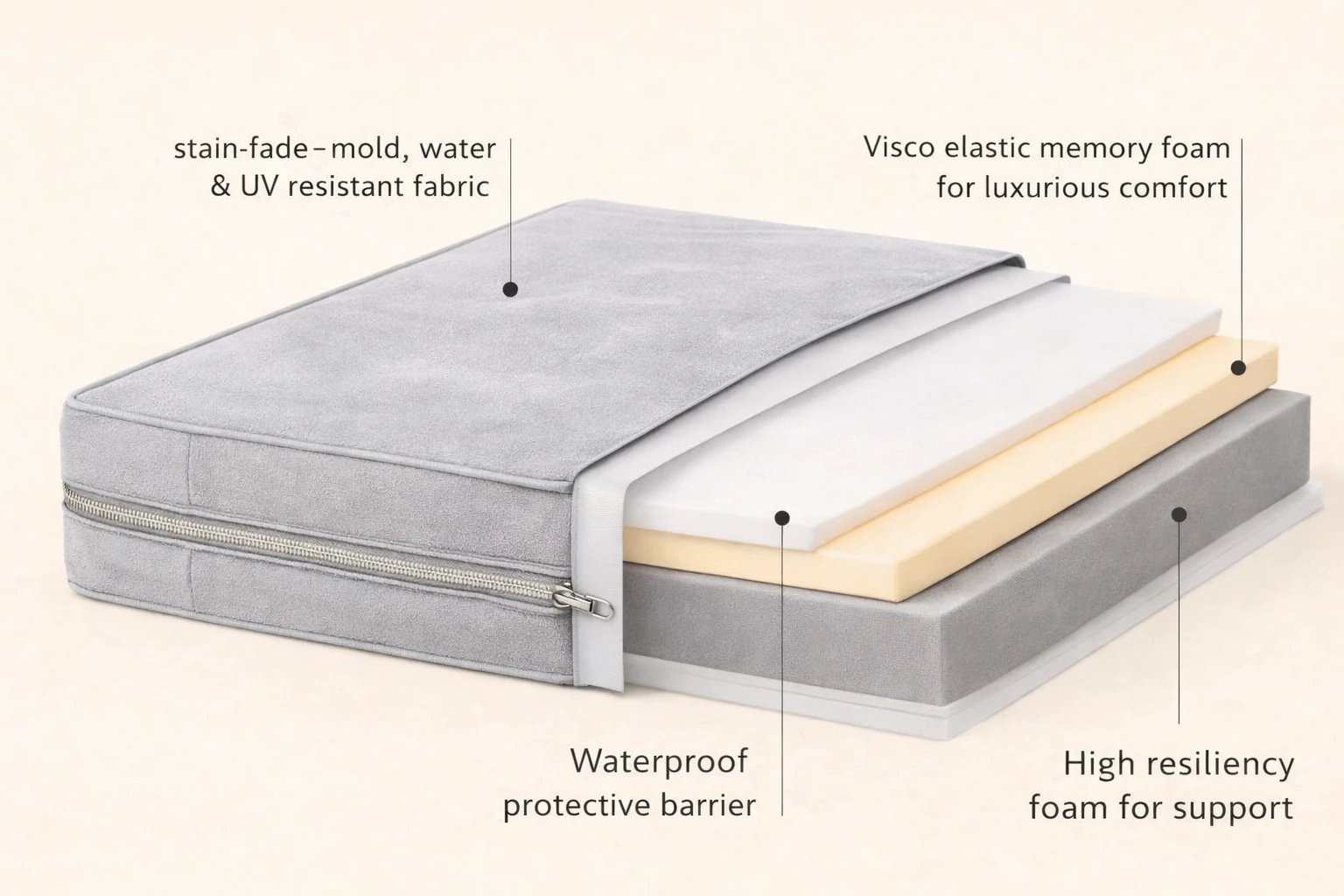
Most outdoor cushions rely on fabric covers, stitching, and surface treatments to manage water.
Over time, water inevitably penetrates through seams and textile layers, reaching the foam core.
This leads to mold, odors, frequent cleaning, and constant replacement.
At ModernLeo, we chose not to improve maintenance routines.
We chose to eliminate the problem at its root.
This structural failure is explained in detail in
Our founder is a PhD in coatings chemistry, with years of experience working with industrial waterproof materials.
Instead of asking “how can we protect cushions better?”,
we asked a different question:
Why does water reach the foam core in the first place?
The answer was structural—not cosmetic.
This shift—from protection to prevention—is explored further in
In traditional outdoor cushions, waterproofing is treated as an external layer:
-
fabric covers
-
stitched seams
-
removable upholstery
But in marine and industrial applications, waterproofing works differently:
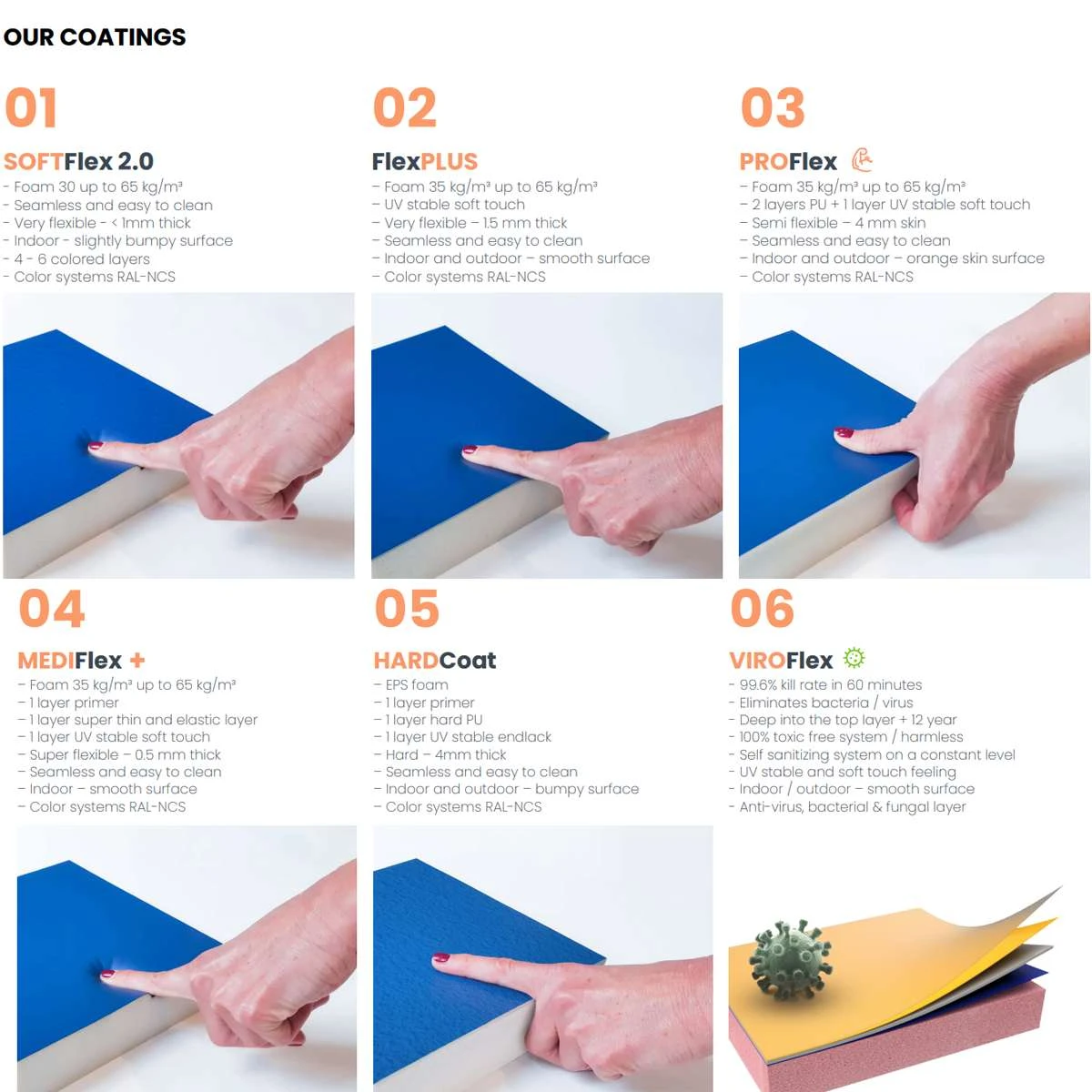
Marine-grade outdoor leather is made by applying liquid polyurethane coatings onto a substrate, forming a seamless, durable waterproof surface.
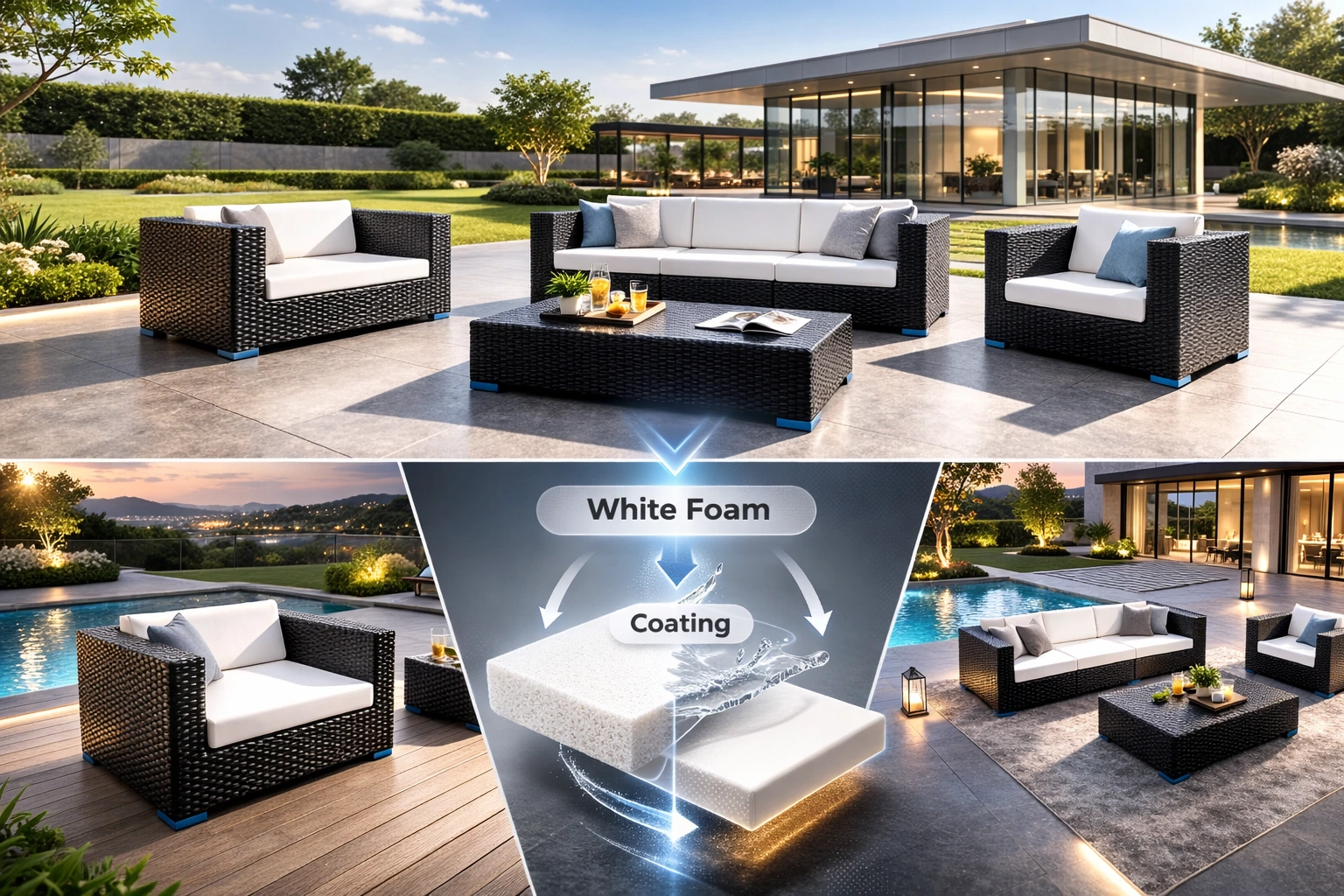
We took this proven industrial principle one step further.Instead of applying polyurethane to fabric and sewing it into a cover,
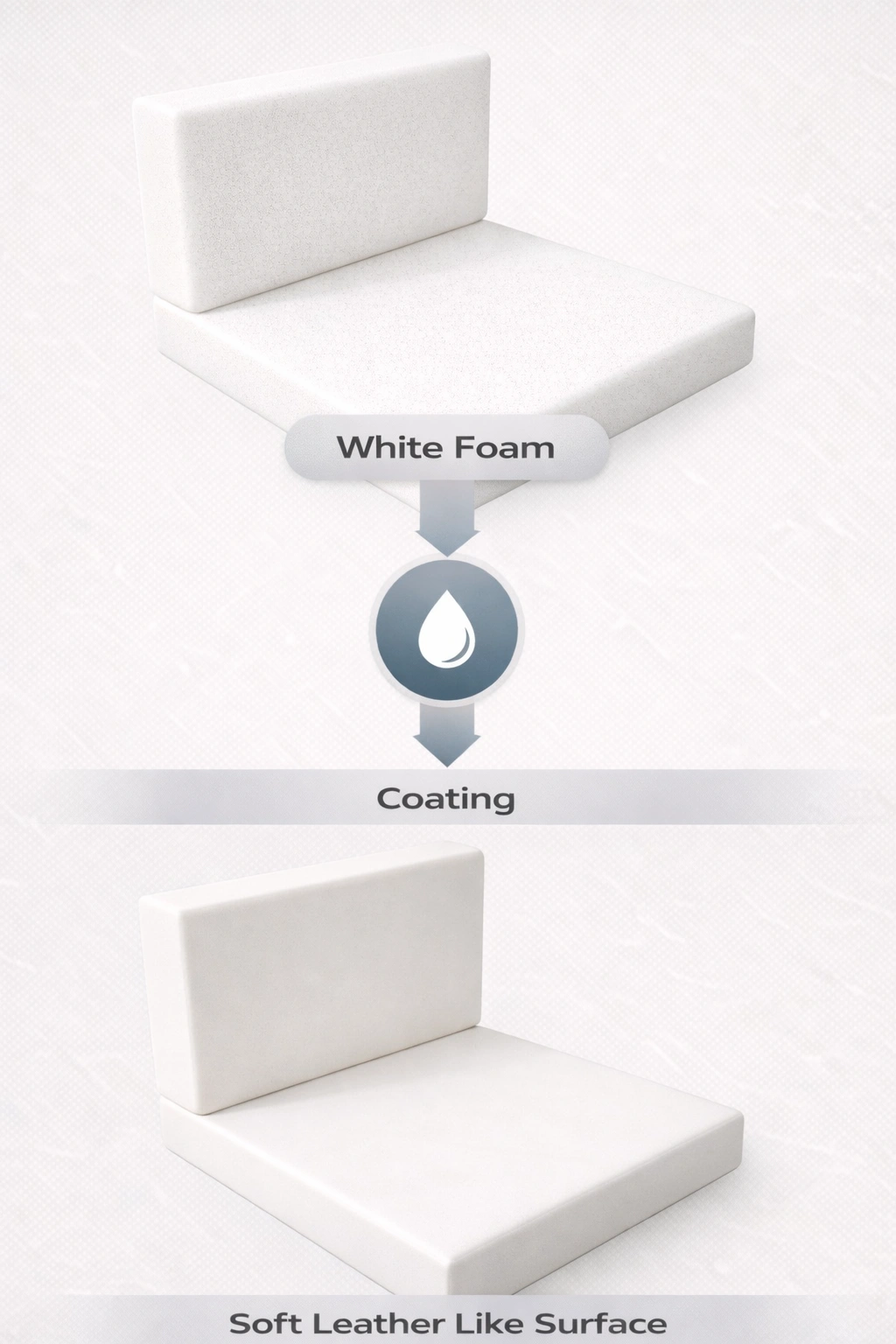
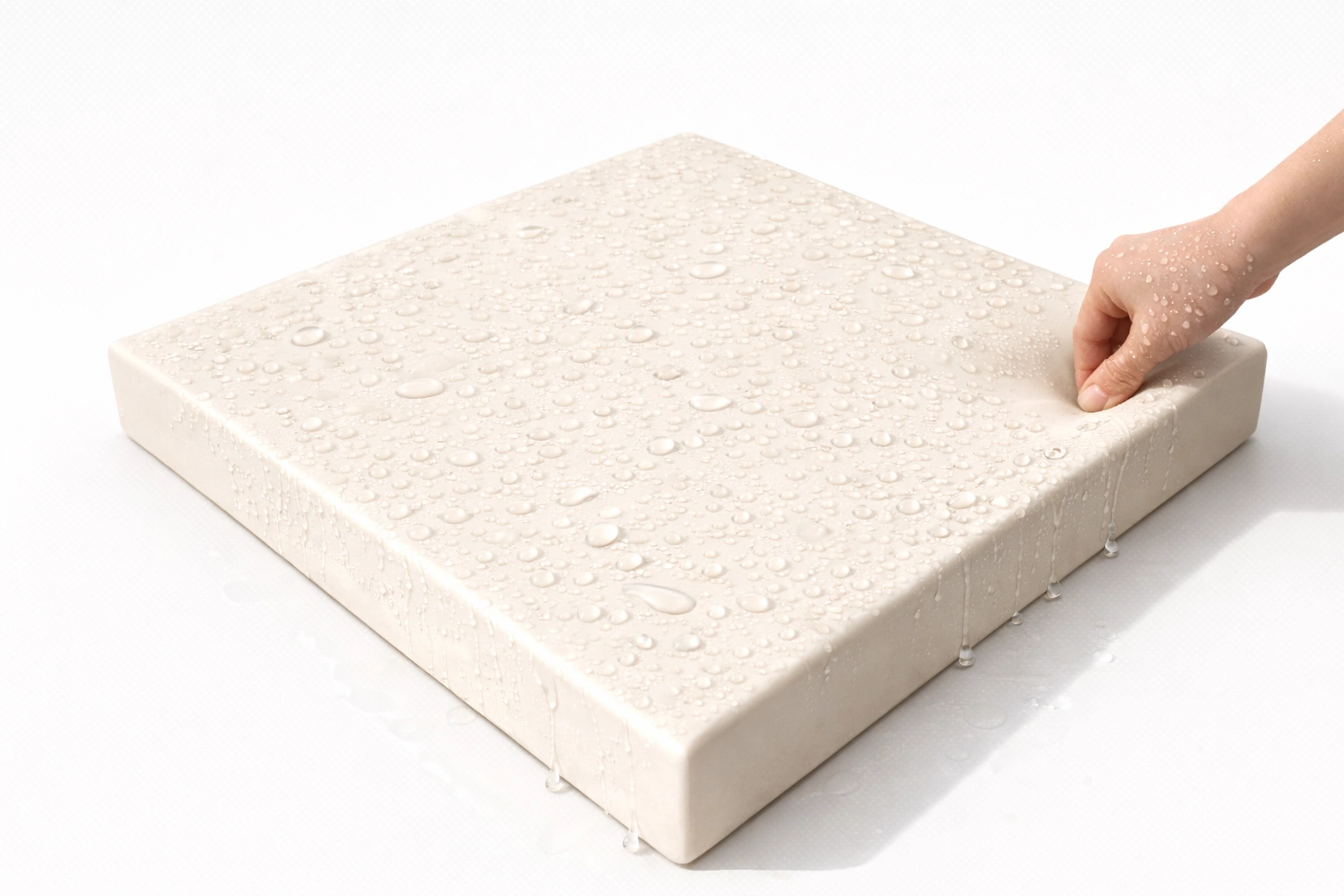
we apply liquid polyurethane directly onto the foam cushion itself.
Once cured, the coating becomes a seamless protective skin—fully bonded to the foam, with no seams, no zippers, and no textile layers.
Water cannot penetrate, because there is no path inward.
A detailed comparison of traditional and seamless cushion structures can be found here
A Structural Explanation of Cushion Failure
For a full material-level comparison, see
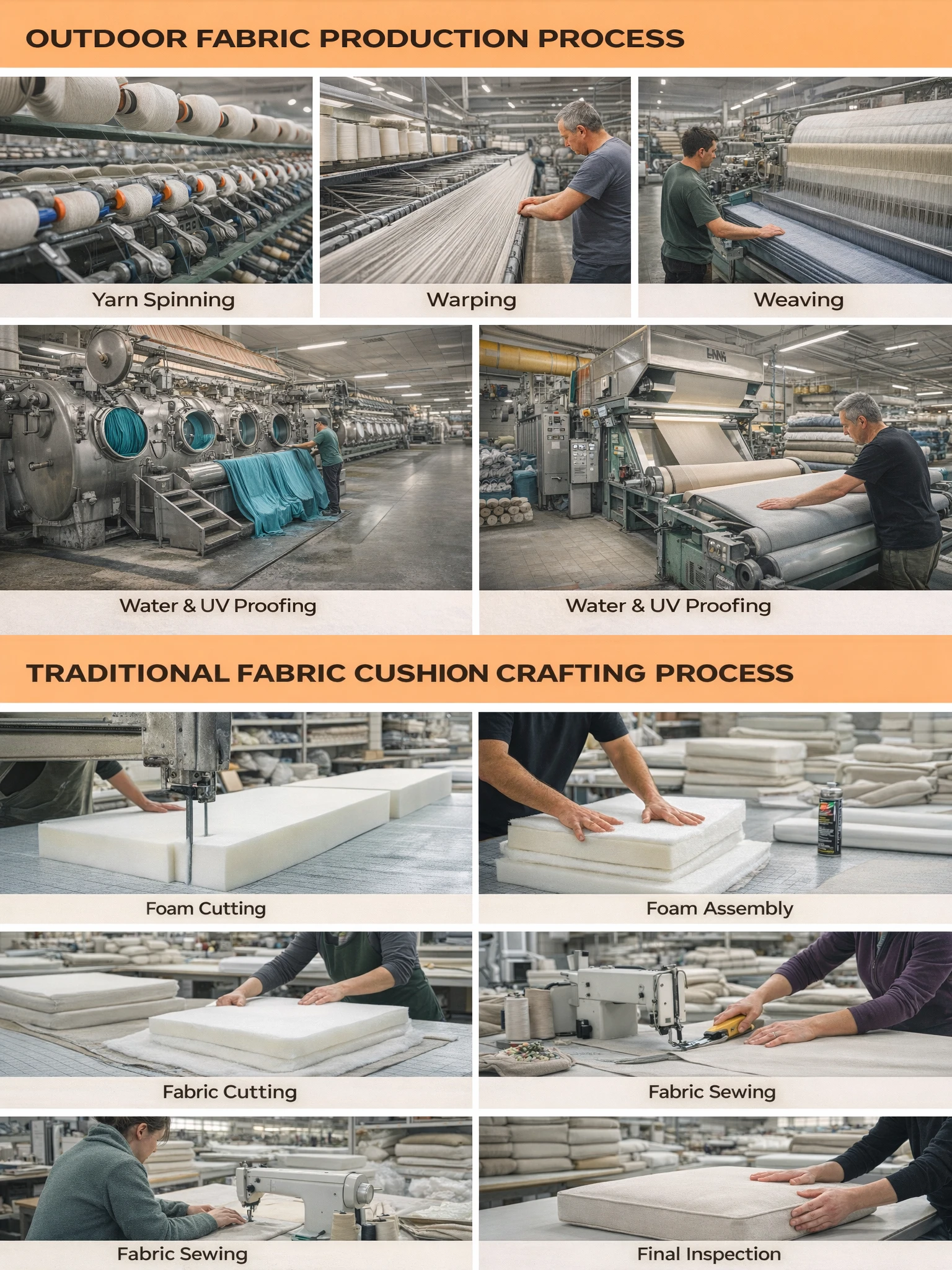
By eliminating fabric covers and sewing processes, our structure achieves more than durability.
It also:
-
Reduces labor by removing an entire production step
-
Simplifies the manufacturing process
-
Avoids the pollution inherent in textile waterproofing treatments
The production of waterproof fabrics inevitably involves:
- heavy chemical processing
- large water consumption
-
significant industrial waste
By contrast, our process removes the need for waterproof textiles altogether.
Every cushion built this way replaces an entire chain of polluting processes upstream.
How structural simplicity changes real-world use is explained here:
One household using a structurally waterproof cushion may seem insignificant.
But at scale:
Each cushion that does not require waterproof fabric represents one less source of industrial pollution.
- Durability reduces replacement
- Structure reduces waste
- Simplicity reduces impact
Our cushions are coated using water-based polyurethane coatings—a mature, widely used industrial material known for:
- Excellent waterproof performance
- Long-term stability in outdoor environments
- Verified environmental compliance within the coatings industry
This is not an experimental material.
It is a proven industrial solution, applied with a new purpose.
See how this material is applied in our:
To solve outdoor cushion problems structurally.
To reduce waste by building things correctly the first time.
And to prove that better design can mean both higher performance and lower environmental cost.
Explore how this mission translates into real products
Better cushions mean fewer replacements.
Fewer replacements mean less production.
Less production means less pollution.
Sometimes, sustainability starts with structure.
Common questions about durability, waterproofing, and lifespan are answered here: